William Shakespeare's Romeo + Juliet
The Bold Visual Language of Romeo and Juliet
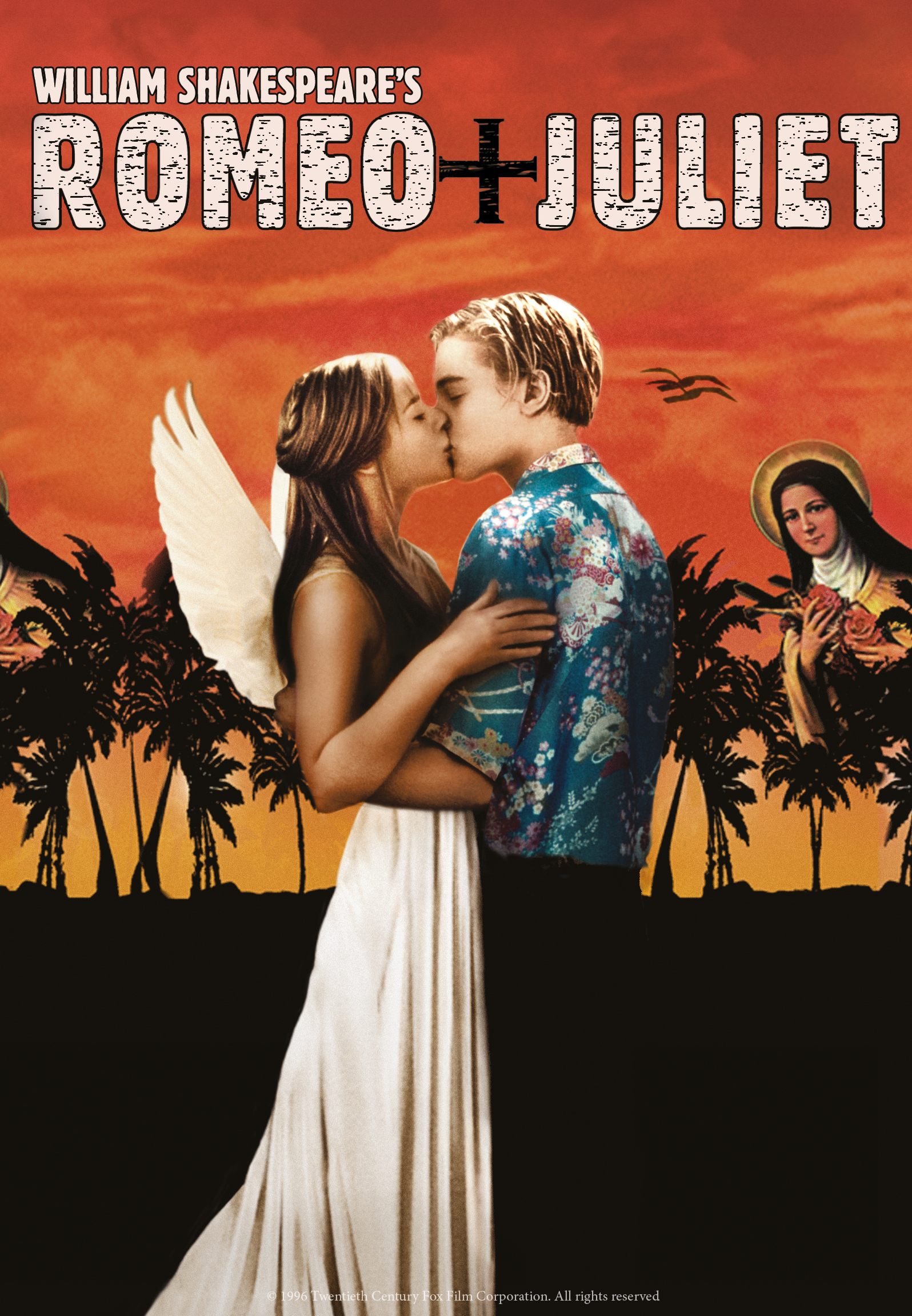
From the first swirling aerial shot of the fictional town of Verona Beach, the film announces that this will not be a period drama in the traditional sense. Luhrmann leans into artifice, using bright primaries, neon signs, and kinetic camera work to create a world that crackles with restless energy. The production design juxtaposes religious iconography with consumerist excess, turning a centuries-old story into a meditation on how tribalism can thrive even in the most glamorous, hyperconnected landscapes. Every frame feels carefully composed yet breathless, inviting the viewer to get lost in its intoxicating chaos.
Costume choices reinforce the heightened reality, with characters dressed in everything from Renaissance-inspired ball gowns to leather, denim, and military regalia, signaling alliances and identities at a glance. The juxtaposition of sacred spaces like churches and confessional booths with scenes of violence in gas stations or nightclubs creates a moral landscape that feels urgently modern. This visual boldness does not distract from the heart of Shakespeare’s story; instead, it amplifies the stakes, making the romance feel even more fragile against a backdrop of stylized danger and constant motion.
Shakespeare’s Language Reimagined for a New Medium
One of the most striking aspects of this adaptation is how it handles Shakespeare’s original text. The script retains much of the Bard’s verse, allowing the beauty of lines like “O, she doth teach the torches to burn bright!” to land with full poetic force. Yet the delivery is often rapid, overlapping, and shouted, echoing the staccato rhythm of modern hip‑hop and pop culture. This choice keeps the language accessible without diluting its power, inviting both longtime fans and first‑time viewers to feel the urgency beneath the words.

The film also uses visual storytelling to illuminate meaning, so that even viewers unfamiliar with every line can grasp the emotional currents. A lingering glance, a hand pressed against a glass pane, or the sudden stillness in a crowded room can convey what dialogue only hints at. By marrying Shakespeare’s lyrical density with cinematic immediacy, Romeo + Juliet becomes a bridge between stage and screen, proving that verse can thrive in a high‑octane, image‑driven context without losing its soul.
The Chemistry of Leonardo DiCaprio and Claire Danes
The casting of Leonardo DiCaprio and Claire Danes as Romeo and Juliet was both daring and inspired, bringing a raw, youthful intensity to the roles. DiCaprio captures the impulsive, poetic nature of the young lover, shifting effortlessly from playful flirtation to anguished despair. His Romeo is driven by feeling as much as by reason, embodying the classic archetype of the lover whose grand gestures are rooted in deep vulnerability. Danes, in turn, brings a grounded sincerity to Juliet, making her transformation from obedient daughter to defiant partner utterly convincing.
Together, their chemistry crackles with an almost electric intimacy, whether they are sharing a quiet conversation across a crowded room or trading rapid-fire banter that feels startlingly modern. The film does not shy away from showing their immaturity and recklessness, which only makes their moments of tenderness and clarity more affecting. In a world saturated with polished, airbrushed romances, their volatile, heartfelt connection stands out as a reminder that Shakespeare’s exploration of young love remains startlingly relevant.
Soundtrack as Narrative Force
The soundtrack of Romeo + Juliet is far more than a backdrop; it is a narrative engine that propels the story forward and deepens its emotional palette. Drawing from alternative rock, pop, and Latin influences, the music underscores the tension between tradition and rebellion, old and new. Tracks pulse during fight sequences, melt into tender moments, and echo the spiritual yearning at the heart of the play, turning each scene into a charged sensory experience.
By weaving contemporary sounds with Shakespeare’s elevated language, the film creates a dialogue between past and present that feels seamless. A hymn-like choir can underscore a sacred vow, while a driving beat can amplify the urgency of a midnight meeting. This bold musical choices reinforce the idea that the themes of forbidden love, family conflict, and fate are timeless, capable of thriving in any era when matched with the right rhythm and soul.
Cultural Impact and Enduring Legacy
Since its debut, Romeo + Juliet has secured its place as a touchstone in both cinema and popular culture, influencing everything from music videos to television to stage revivals of Shakespeare. Its daring blend of classic text and contemporary style has opened doors for other filmmakers to take creative risks with literary adaptations, proving that fidelity to a story does not require a faithful recreation of its setting. The film’s visual vocabulary, from its iconic fish tank scene to its final tragic tableau, has been endlessly referenced and reimagined, embedding itself in the collective imagination.
Beyond aesthetics, the film’s exploration of tribalism, communication breakdown, and the destructive weight of inherited hatred resonates even more strongly in a world still grappling with division. By translating Shakespeare into a language that feels immediate and visceral, Romeo + Juliet invites new generations to engage with his work not as a dusty relic but as a living, breathing conversation about love, power, and responsibility. Its legacy is not just in how it reinterprets a single play but in how it expands what Shakespearean cinema can be.
Conclusion
William Shakespeare’s Romeo + Juliet succeeds because it trusts the power of both words and images, refusing to simplify either. It embraces the theatricality of the original while diving headfirst into the chaos of modern life, creating a film that is at once romantic, violent, and deeply human. By honoring the emotional core of Shakespeare’s story and amplifying it through bold directorial choices, the film remains a vital, vibrant testament to the endurance of great storytelling. For viewers old and new, it offers a reminder that love, conflict, and fate can feel startlingly close, no matter how much the world changes around them.
Romeo + Juliet (1996) - 'Gas Station Scene' [1080]
No description available.
