People's Republic Of China Flag

Historical Origins and the Design Competition
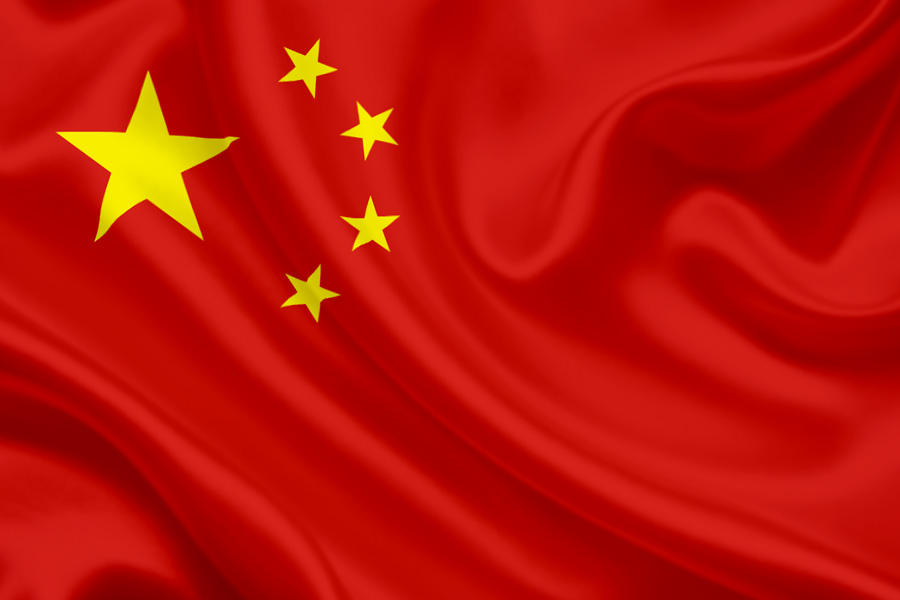
Following the establishment of the People's Republic of China in 1949, the new government launched a nationwide competition to find an official national flag. The task of reviewing thousands of submissions fell to a special committee led by the prominent writer and artist Guo Moruo. Among the many designs presented, the winning proposal was put forward by Zeng Liansong, a citizen from Rui'an, Zhejiang province. His design featured a red background symbolizing revolution, a large golden star representing the Communist Party of China, and four smaller stars arranged in a semi-circle around it, symbolizing the unity of the Chinese people under the Party's leadership.
The specific date of the flag's adoption is steeped in historical significance. It was officially unveiled and first raised during the proclamation ceremony of the People's Republic of China on October 1, 1949, in Tiananmen Square. This moment marked the culmination of a long revolutionary struggle and the beginning of a new era for the nation. The design was formally confirmed as the national flag by the First Session of the Chinese People's Political Consultative Conference (CPPCC), cementing its status as a foundational symbol of the newly formed state.
Symbolism and Meaning of the Five Stars
The symbolism of the People's Republic of China flag is both deliberate and profound. The large golden star represents the Communist Party of China, which is considered the vanguard of the Chinese people and the nation's leading force. Its position signifies that the Party occupies a central and guiding role in the country's governance and development. The color gold is used to symbolize the bright future of the Chinese nation and the light of revolution.
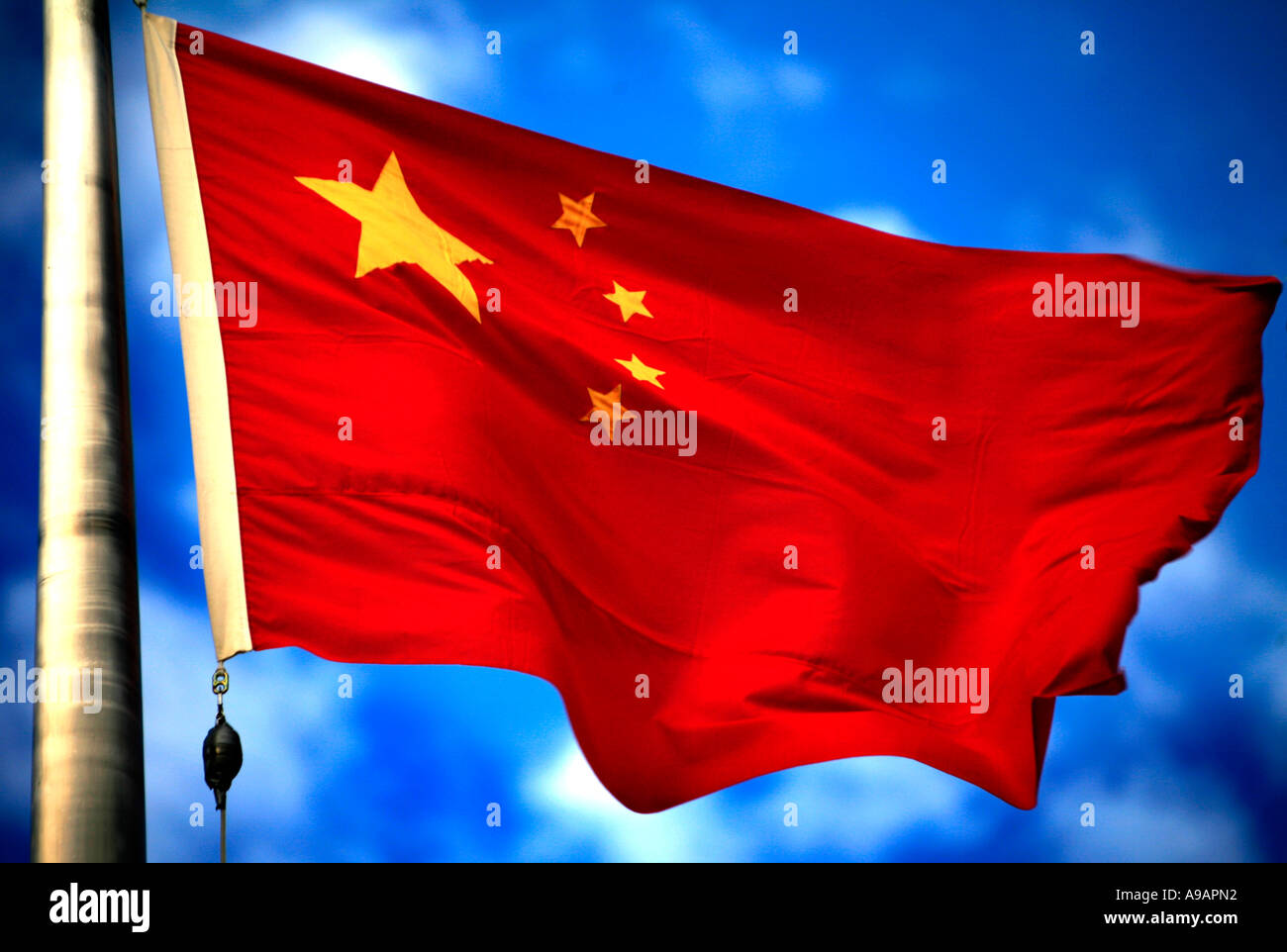
The four smaller stars are positioned on the right side of the large star, each with one point facing the center of the large star. They represent the four fundamental social classes of Chinese society at the time of the flag's creation: the working class, the peasantry, the urban petty bourgeoisie, and the national bourgeoisie. Crucially, the smaller stars are depicted with their points touching the larger star, illustrating the concept of unity. This unity signifies that these various social classes are all led by the Communist Party and are united in building the nation, creating a visual metaphor for national solidarity under a single, collective purpose.
Official Specifications and Manufacturing Rules
To ensure the flag is displayed with the utmost respect and consistency, the government of the People's Republic of China has established detailed official specifications. These regulations dictate not only the colors but also the precise geometric proportions of the flag. The standard ratio of the flag's length to its width is 3:2, providing a distinct horizontal rectangular shape. The red background is specified using a particular shade of red, officially known as "China Red," which is deep and vibrant, representing the revolutionary spirit.
The positioning of the stars is governed by exact mathematical rules. The large golden star has a diameter calculated as 3/20 of the flag's length, while each of the four smaller stars has a diameter of 1/20 of the flag's length. The center of the large star is placed at a point one-fifth of the flag's length from the hoist (the side closest to the flagpole) and one-half of the flag's width from the top. The centers of the four smaller stars are positioned on a circle intersecting specific points on an inscribed circle around the large star, ensuring they are evenly spaced and all oriented with one point facing the center of the large star. These precise rules are essential for maintaining the flag's intended symbolism and dignified appearance.
Respect, Protocol, and Display Guidelines
In the People's Republic of China, showing proper respect for the national flag is a matter of civic duty and is governed by specific laws and regulations. The National Flag Law outlines the correct way to handle, display, and treat the flag. It must be flown from sunrise to sunset on designated flag-raising days and locations, and when displayed vertically, the star-tipped side should face the observer's left. The flag should never touch the ground or be used as a decorative covering, ensuring it is always treated with the reverence it deserves as a sovereign symbol.
There are also clear rules regarding situations where the flag should not be used. For instance, it should not be displayed in public places where it might be soiled or damaged, nor should it be used for commercial advertising or in a manner that could be seen as disrespectful. During solemn occasions or memorial events, the flag is often flown at half-mast as a sign of mourning. Understanding and adhering to these protocols is a fundamental way for citizens and organizations to demonstrate patriotism and respect for the nation represented by the People's Republic of China flag.
Variations and Special Uses
While the standard national flag is the most common version, there are specific variations used for particular official functions. The military of the People's Republic of China uses a distinct military flag, which features the national emblem—a golden representation of the Tiananmen Gate surrounded by golden ears of grain and a cog—on a red background with a yellow star at the upper left corner. This flag is a powerful symbol of the armed forces' role in defending the nation.

Additionally, there are specific flags used on naval vessels and merchant ships, which incorporate the national flag design into a white or red ensign. On ceremonial occasions, such as major state parades or international summits, the flag of the People's Republic of China is displayed with immense pride and ceremony. These variations ensure that the core symbol is adapted for different institutional and functional contexts while always maintaining a clear connection to the central national emblem and its meaning.
Conclusion
The People's Republic of China flag is far more than a simple piece of cloth; it is a profound and carefully crafted symbol that encapsulates the nation's history, political structure, and collective aspirations. From its origins in a post-revolutionary design competition to its strict modern-day specifications, every detail of the flag tells a story. The unity represented by the five stars, the revolutionary spirit of the red background, and the precise rules governing its use all contribute to its powerful presence. Whether flying above a government building or being carried in a parade, this flag remains a constant and potent reminder of the identity and enduring spirit of the People's Republic of China.
The National Flag of the People's Republic of China. / Chinese Flag.
The flag of China, officially the National Flag of the People's Republic of China, also known as the Five-star Red Flag, is a ...
